Excise Duty Scrapped on EVs; 20% Customs Duty Introduced with Clean Infrastructure Levy





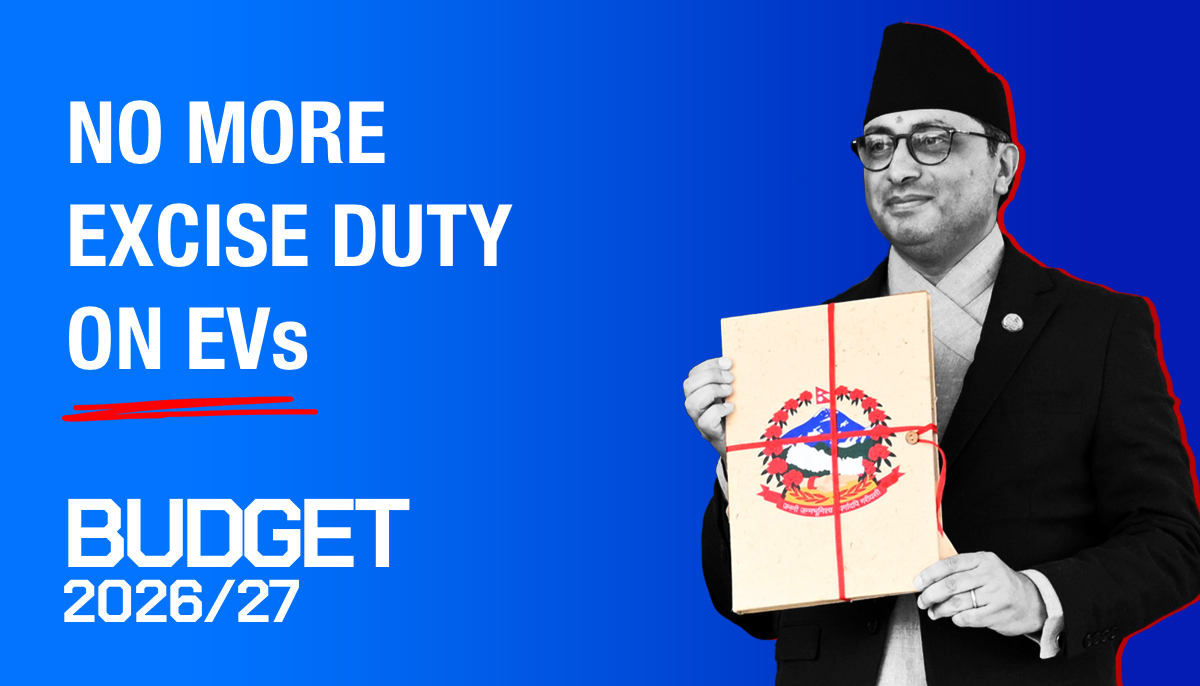
The government has scrapped the excise duty previously imposed on electric vehicles (EVs) as part of the new fiscal framework for the upcoming fiscal year 2083/84.
The decision comes through the new Economic Act 2083, which replaces the earlier motor power-based taxation system with a price-driven structure.
Under the revised policy, EVs will no longer be taxed based on motor peak power. Instead, a new “clean infrastructure investment fee” has been introduced, aimed at funding domestic EV infrastructure development, including charging stations and battery management systems.

At the import stage, all electric vehicles will now be subject to a uniform 20% customs duty calculated on CIF (Cost, Insurance, Freight) value.
The government has also consolidated multiple tariff headings into a single classification (HS Code 8703.80.91), streamlining EV import taxation.
However, the most significant change is the introduction of a tiered clean infrastructure levy based on vehicle value:
- EVs valued up to Rs 20 lakh will be charged a 2.5% levy
- EVs valued between Rs 20-30 lakh will be charged a 20% levy
- EVs priced between Rs 30–40 lakh will face an additional 35% levy
- EVs priced between Rs 40–50 lakh will be charged an additional 90% levy
- EVs priced above Rs 50 lakh will be subject to an additional 130% levy
The levy is applied on the taxable value after customs duties are calculated, effectively increasing the overall import cost depending on the price segment.
According to the new structure, EV taxation is now fully decoupled from motor power and instead tied to declared import value. The policy shift is expected to significantly reshape the pricing structure of electric vehicles in the Nepali market.
The new reform marks a major overhaul in Nepal’s EV taxation system, replacing excise duty with a layered value-based levy while maintaining a flat customs duty framework.